AI-Powered is a crucial component in software engineering, and the rate of change is quickening. In conventional software development, developers may spend a considerable amount of time writing repetitive code, locating bugs, testing the applications, documenting projects, and managing the development workflows. Software engineers are shifting from routine tasks to creativity, problem solving, software architecture and innovation, with AI-powered development tools helping to ease the burden of many of these tasks.
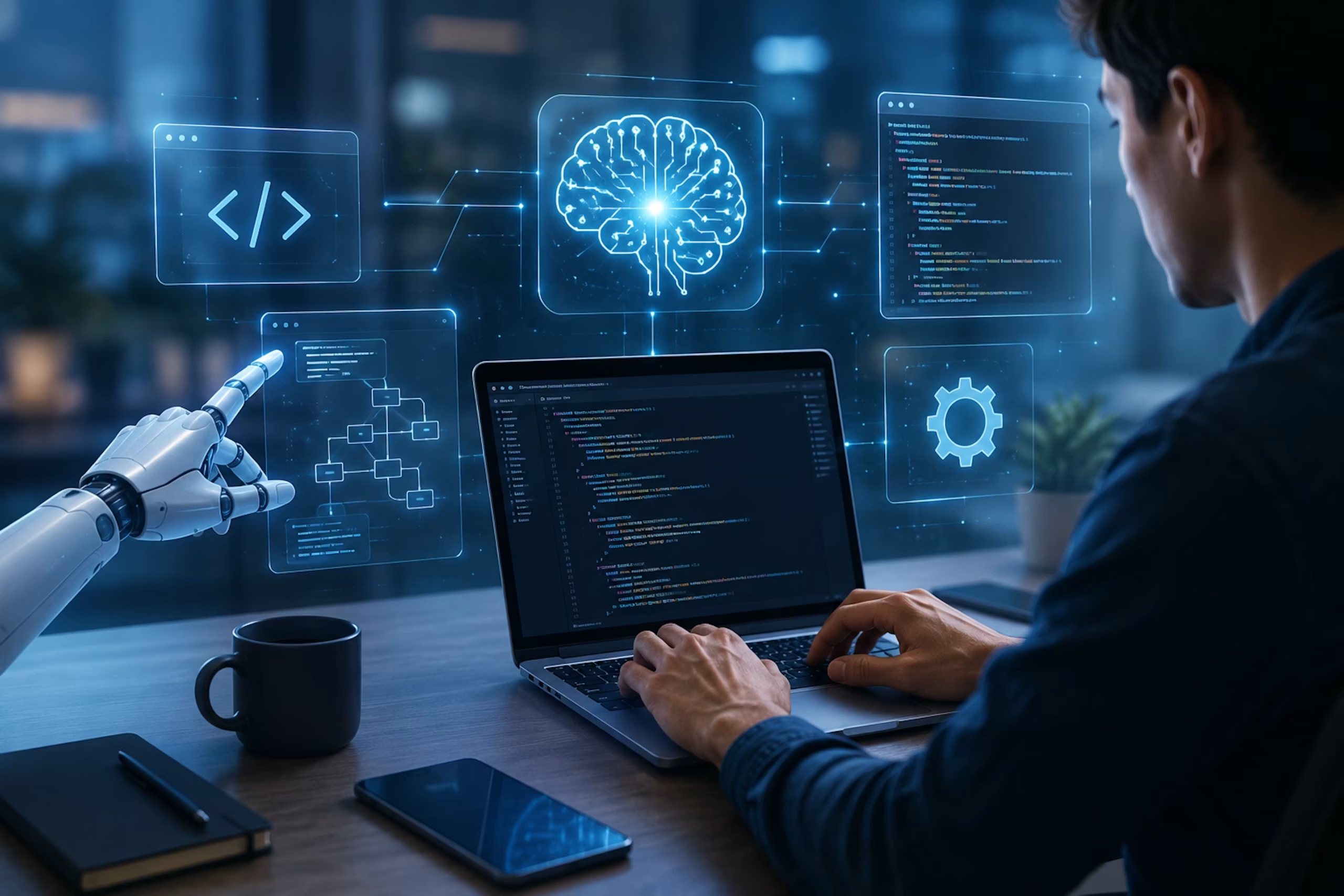
Development tools are enhancing the software planning, building, testing, and maintenance process, from AI-powered assistants to automated testing platforms to intelligent debugging systems. These technologies are not just taking the place of the traditional programming techniques. Instead, they are building a more streamlined development environment for humans and AI to collaborate.
The Rise of AI-powered in Software Engineering
The days of AI being confined to research labs have given way to its application as a viable software development tool. AI-powered systems can interpret code, find patterns in code, generate code fragments, explain code and detect bugs.
This change has been aided by the increasing availability of large language models. Now, developers can use natural language to interact with AI tools, and receive suggestions, explanations, or even code according to their needs. This will help even with the development process and also aid experienced engineers finish regular jobs promptly.
AI-powered development tools are becoming valuable throughout the software development lifecycle. They are able to assist with requirements analysis, coding, testing, monitoring for security, documentation, deployment and maintenance.
AI Coding Assistants Improving Developer Productivity
The AI-powered assistant is one of the most apparent uses of AI in software engineering. These tools check the code that a developer is currently working on and give suggestions depending on the context surrounding the code.
AI assistants can create functions, finish code, build repetitive structures, and explain unfamiliar programming concepts to the developers. Developers can add the desired functionality and leverage AI-powered elements as a foundation rather than typing each line.
This can substantially shorten the time spent in routine programming. A developer working on an app could, for instance, use an AI tool to design a simple API endpoint, compose a database query or even generate a standard validation function. The developer is then able to examine, edit and incorporate the code produced.
The use of AI-powered assistants shines through in their ability to handle repetitive tasks, freeing up engineers’ time for more critical tasks like system design and business logic.
Automated Code Generation and Refactoring
AI-powered development tools are also revolutionizing the process of writing and refining source code. The code generation systems can generate code from the descriptions in the natural language, the structure of the existing projects or the requirements of a specific programming.
Another area of assistance that AI can offer is in the process of refactoring.Another area where AI can be particularly helpful is refactoring. Refactoring is the process of restructuring the code without altering its behaviour. Developers might have to rename variables, simplify functions, get rid of code duplication, or improve code readability.
AI can point out areas where these enhancements might be made, and can recommend modifications. This can simplify the management of large code bases and enable software teams to enhance their software quality over time.
But even with AI-powered development code, there needs to be human oversight. The developers should make sure that the solution produced meets the project requirements, security standards, coding conventions and performance expectations.
Intelligent Debugging and Error Detection
When you’re developing software, one of the most time taking processes may be debugging. A few lines of programming code can produce unexpected behaviour, meaning that developers will have to consult several files to pinpoint the cause.
Autonomous tools can use AI to analyze source code, error messages, logs and application behavior to give clues about potential problems. Some tools will offer suggestions for repair or an explanation of what is causing a specific error.
This means debugging is more efficient, particularly when dealing with large and complex applications. AI can assist developers in identifying patterns that they might not be able to see through human eyes.
For instance, an AI development system could identify that a specific function is giving out unusual outcomes due to data handling errors or inconsistencies. The developer doesn’t have to dive into the application itself to find an explanation, but can start with one generated by the AI and explore the proposed region.
AI-powered Software Testing
Another significant field where AI is making a profound impact is in testing. Artificial intelligence is also revolutionizing the field of testing. Traditional testing forces developers and quality assurance teams to write tests, run those tests, interpret and analyze the outcomes and modify tests as applications evolve.
Test case generation tools can be used with AI to generate test cases from the application behavior and source code. They are able to recognize the critical scenarios, find potential failures and assist the developers to increase test coverage.
AI can also look back at the test results to see if there are any recurring issues. This enables teams to concentrate their attention to the areas where defects are more likely to occur.
AI-powered automated testing can minimize repetitive manual testing tasks and enable teams to provide software more efficiently. For organizations that employ continuous integration and continuous delivery, faster testing is particularly crucial.
Improving Software Documentation
Documentation is essential to keeping projects going, but it’s hard for developers to keep documentation up to date. AI tools can provide explanations for functions, classes, APIs and other components of a codebase.
AI can generate technical documentation from the source code and then review the generated documentation for accuracy. AI can also help interpret complex code and explain it in simpler terms, which can help new team members comprehend an existing project.
Improved documentation can help with greater collaboration between the developer and the shorter onboarding time. It can also facilitate long term maintenance, as there is more information for the developers on how the various parts work.
Strengthening Cybersecurity in Development
Security is one of the most important aspects of software development. Security Vulnerability Analysis in AI-powered development Tools can help detect potential security issues within the source code and development process.
These can be used to analyze code for suspicious code, insecure settings, weak dependencies, and common programming errors. Avoiding security problems before software enters production is made possible by early detection.
Additionally, AI can help security teams sift through vast amounts of data and detect unusual patterns. This can help establish more secure applications and minimize portions of manual effort in security reviews.
AI-powered development security recommendations might not always grasp the complete business and/or technical environment of an application, and therefore, human knowledge will always be needed.
Using AI to Assist Project Planning and Collaboration
AI doesn’t just affect code it can impact multiple aspects of software development. AI can have a wider impact than just coding. AI tools can also assist development teams in planning and collaborating on projects.
For technical discussions, AI systems can provide summaries, for development tasks, they can organise and prioritise, for project documentation, they can create and for issue reports, they can analyse. These features can lessen administrative tasks and enhance team communication.
AI can offer project managers and technical leaders insights into development processes and identify potential bottlenecks. With proper use, these tools can enhance efficiency in project management without taking the place of the human decision-making process.
Benefits of AI-Powered Development Tools
AI-powered development tools offer several key advantages for today’s software development teams.
Faster Development
AI can automate repetitive programming and documentation tasks, aiding developers in completing projects faster.
Higher Developer Productivity
AI can help developers with routine tasks, freeing up their time for architecture, innovation, and complex problem-solving.
Improved Code Quality
AI can detect potential bugs, highlight refactoring opportunities, and make code structure recommendations.
Better Testing
AI-powered development testing can aid in creating test cases and uncovering potential application vulnerabilities.
Easier Learning
AI can provide explanations on programming concepts and unfamiliar code to the developers, particularly beginners.
Reduced Repetitive Work
Automating repetitive tasks frees up developer time and lets teams concentrate on more meaningful engineering tasks.
Challenges and Limitations of AI Development Tools
While AI-powered tools for development offer significant advantages, they come with some drawbacks as well. The code generated by AI can sometimes be incorrect, contain vulnerabilities, suboptimal solutions, or outdated methods. Developers must, therefore, take the time to check the output of AI.
Data Privacy is another issue of concern. Before integrating, it’s crucial for organizations to know how development tools treat source code and other information that can be sensitive.
AI can have its drawbacks, especially when overreliance occurs. Programming basics are still essential for the developer to be able to assess generated code and make informed technical decisions.
Issues around intellectual property, compliance, and accountability are also of concern. Clear guidelines for the use of AI tools and content review of AI-generated content should be implemented within organizations.
The Role of Man In the Work of the Computer
While AI-powered is a valuable aid to development, human skill is still a must-have. Software engineering is not all about coding. The developers should be aware of the needs of the business, the expectations of the users, the system architecture, security, scalability and long-term maintenance.
AI can give suggestions, but the humans will have to decide if they are appropriate. The developer is responsible for checking the generated code, testing the application and taking final decisions on technical aspects.
What is needed is thus a combination of human and AI collaboration. Organizations do not need to fear AI and see it as a replacement for developers, but rather as a tool that can help increase their productivity.
The Future of AI-Powered Software Engineering
The future of AI-powered development software engineering looks promising. The future development environments could be more intelligent and give contextual help throughout the development lifecycle.
Teams might be able to automate the process from requirements to prototype, testing, documentation and deployment with the help of AI systems. Development platforms can also gain greater insight into customizing a team’s coding style, project structure, and workflow.
With the advances in AI capabilities, system level thinking, product design, problem solving, security and strategic decision making will be increasingly focused on by developers. There will be a continued need for programming skills, but the ability to use AI effectively will be a growing engineering skill.
Best Practices for Using AI Development Tools
By developing clear practices, organizations can reap more benefits from AI-powered development tools. It is always important to check the code generated by a developer, before using it in a system.
Private information should be treated with care and teams should be aware of the privacy and security policy of the tools they use. The solutions created by AI need to undergo standard testing, code review and security practices as well. AI should be used as a tool and not as a rule of thumb. AI suggestions and human judgment result in more accurate and sustainable software.
Conclusion
The impact of AI-powered tools on software development is undeniable, as they drive productivity enhancements, repetitive tasks, aid in debugging, facilitate testing, and simplify technical information. These technologies are assisting development teams in creating and sustaining software in a more efficient manner.
But, there needs to be balance when using AI. Technical knowledge, critical thinking, security awareness, and human judgment need to be continued to be used by the developers. While AI can speed up the development process, quality software relies on meticulous planning, testing, review, and responsible decision making.
AI-powered tools for software development will be more and more integral to the software engineering landscape as AI continues to grow. By integrating AI with robust engineering practices, organizations and developers can better prepare themselves to build software that is reliable, secure, and innovative in the future.